ghost
Building Ghost's
operational core
Turning post-sale fragmentation into a single source of truth
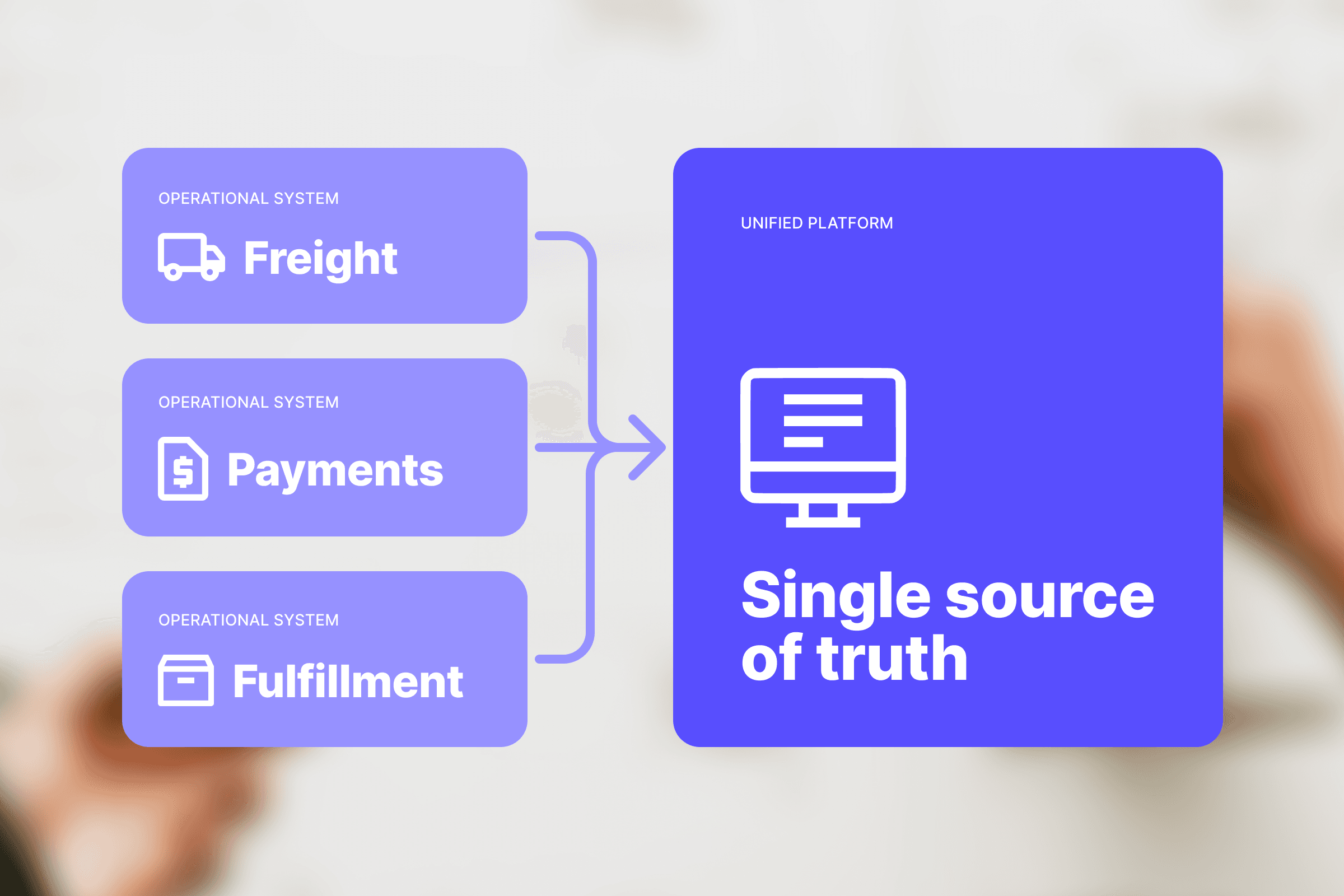
As Senior Product Designer: I led the end-to-end platform strategy integrating three key systems across Operations, Finance, Sales, Buyers, and Sellers. I designed data-dense internal tools for 8+ roles and self-service flows for buyers, all within existing architecture and API constraints.
When the Platform Stops at the Sale
Ghost's B2B commerce platform captured deals but everything after (freight coordination, payment collection, order fulfillment) was handed off to third party tools, creating fragmented workflows for Operations and Finance, and degraded experiences for buyers and sellers.
Platform Impact
⚡️ Operational Efficiency
✔️ 75% reduction in manual freight work
✔️ 8 → 1 tools consolidated
✔️ 20hr per deal efficiency gain (35hrs → 15hrs)
💰 Business Value
✔️ 9-figure annual order value (AOV) supported
✔️ 24% → 96% payments adoption
✔️ 68% faster time-to-payment
👥 User Experience
✔️ 8+ user roles supported
✔️ Real-time shipment visibility unlocked
✔️ Automated buyer/seller communication triggers
🏗️ Platform Foundation
✔️ Unification for single source of truth
✔️ Audit-ready documentation
✔️ Cross-system data flows and triggers
Architecture Before Products
Ultimately it was about mapping the foundation before designing the tools. The problem wasn't just inefficiency, it was invisibility. We lacked a complete picture of order status, shipment tracking, and total costs.
❌ The business had no audit trail, hidden labor costs, disparate data
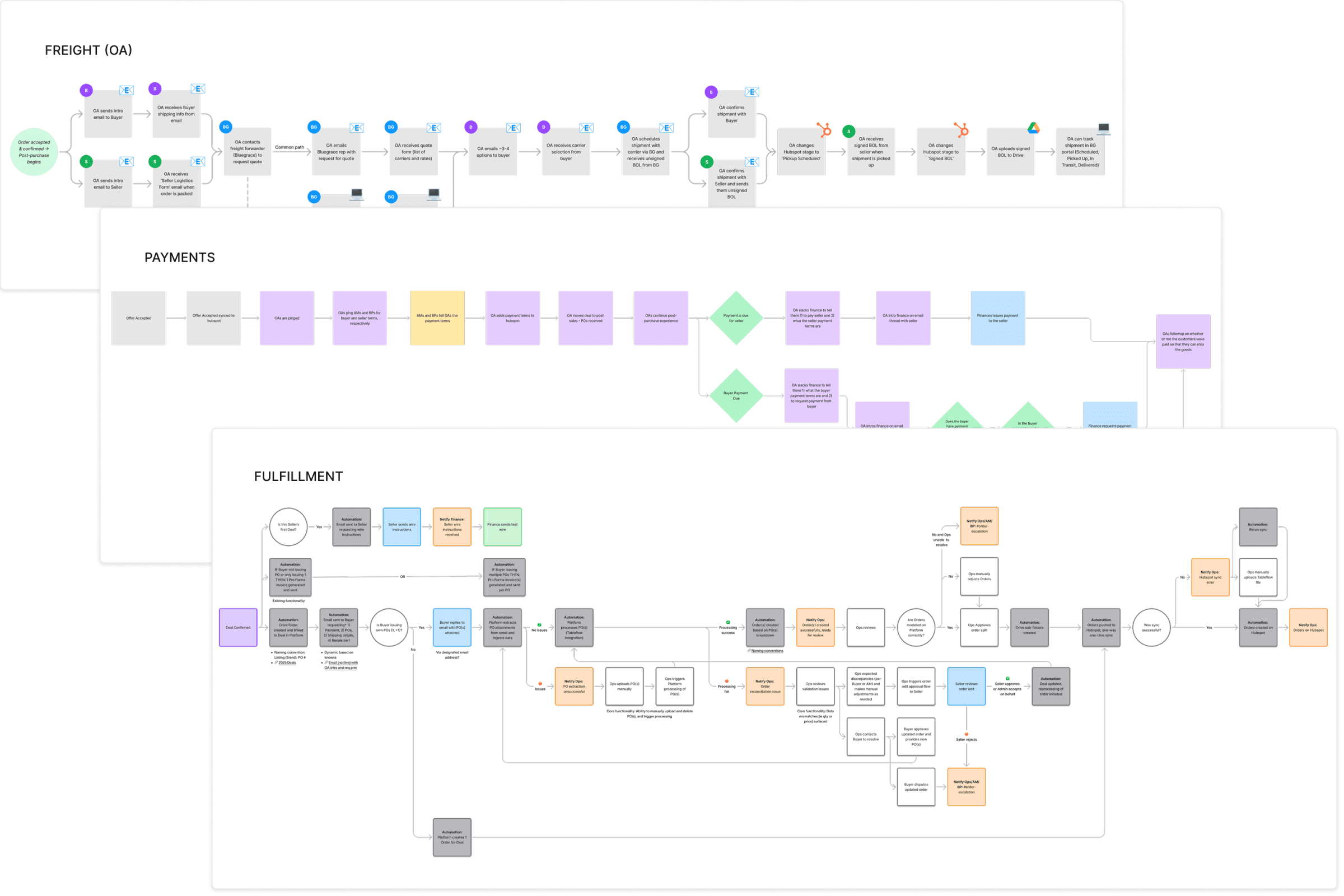
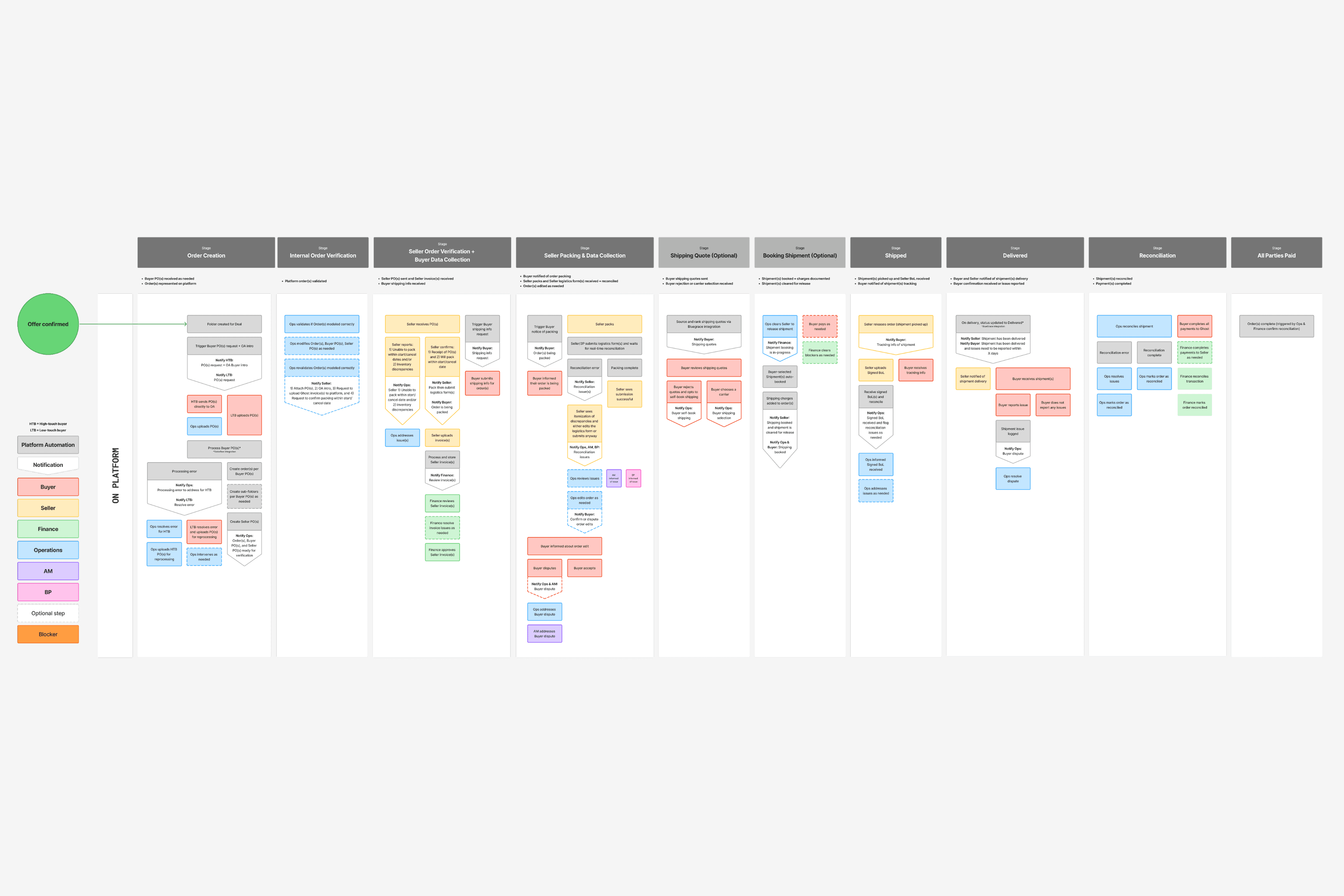
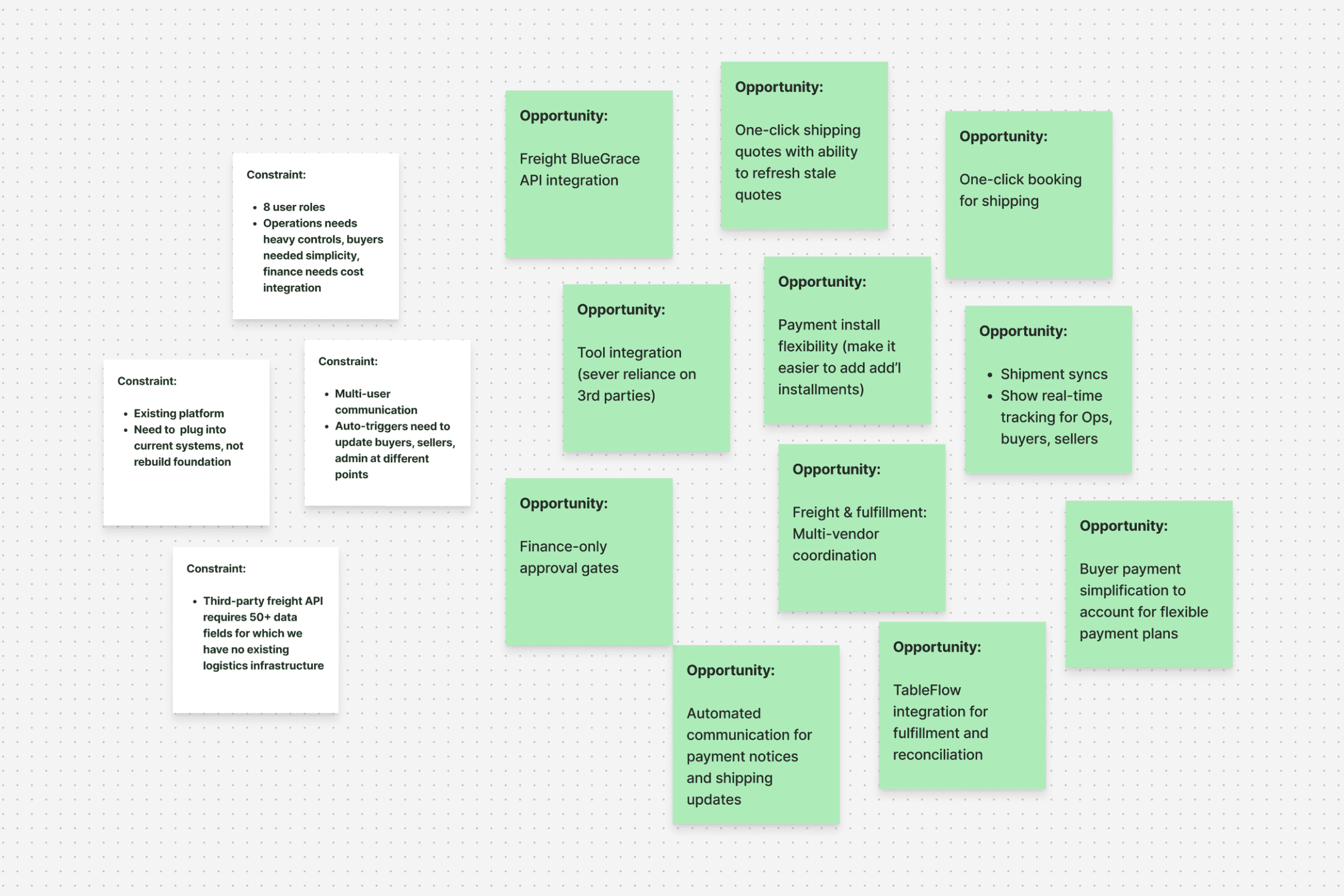
FOUNDATIONAL GOALS
Account for two distinct experiences (data-dense admin, streamlined buyer)
Share underlying data architecture
Build with modular components to fit existing patterns
System 1: Bringing Shipments On Platform
Off-platform booking was manual, slow, and prone to delays.


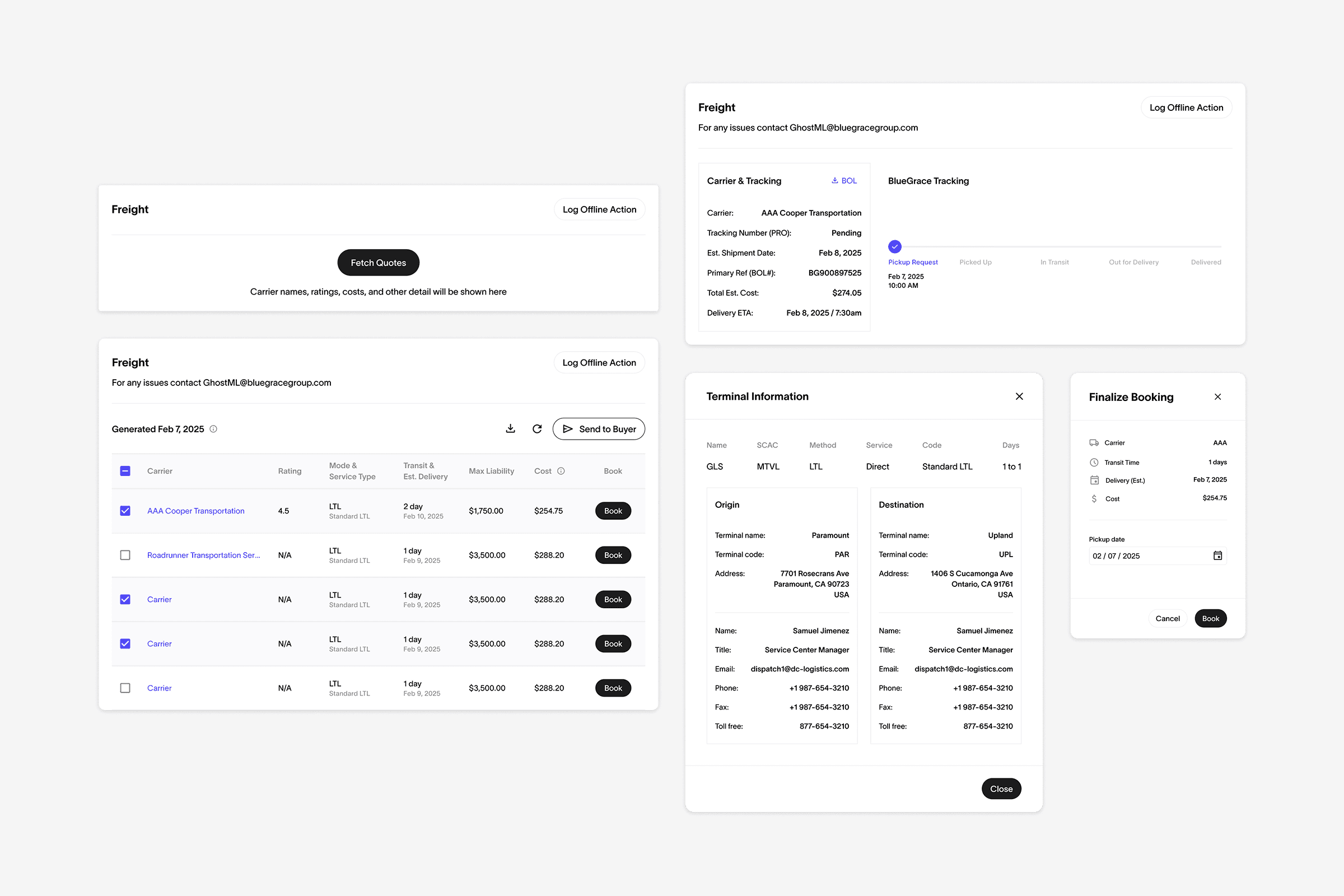
OPERATIONS EXPERIENCE
Key to our approach was integrating with BlueGrace's API (third party freight provider).
I designed a feature-rich dashboard where Ops could:
Generate and refresh quotes
Book and modify shipments
Track in real-time
Ghost is a private platform, any data shown has been sanitized or approximated
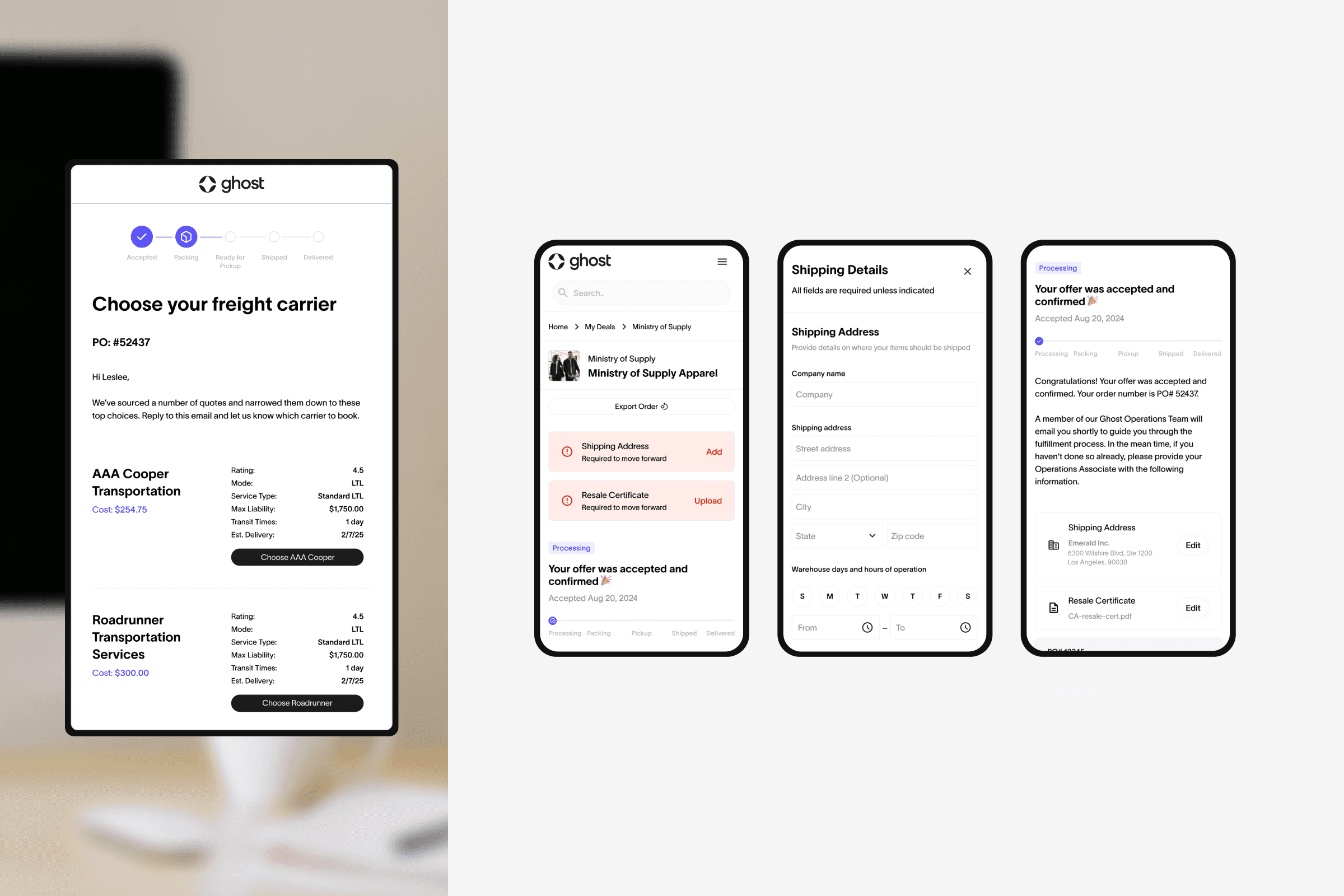
BUYER EXPERIENCE
I enhanced buyer touchpoints:
Quote review
Carrier selection
Real-time tracking
Automated notifications
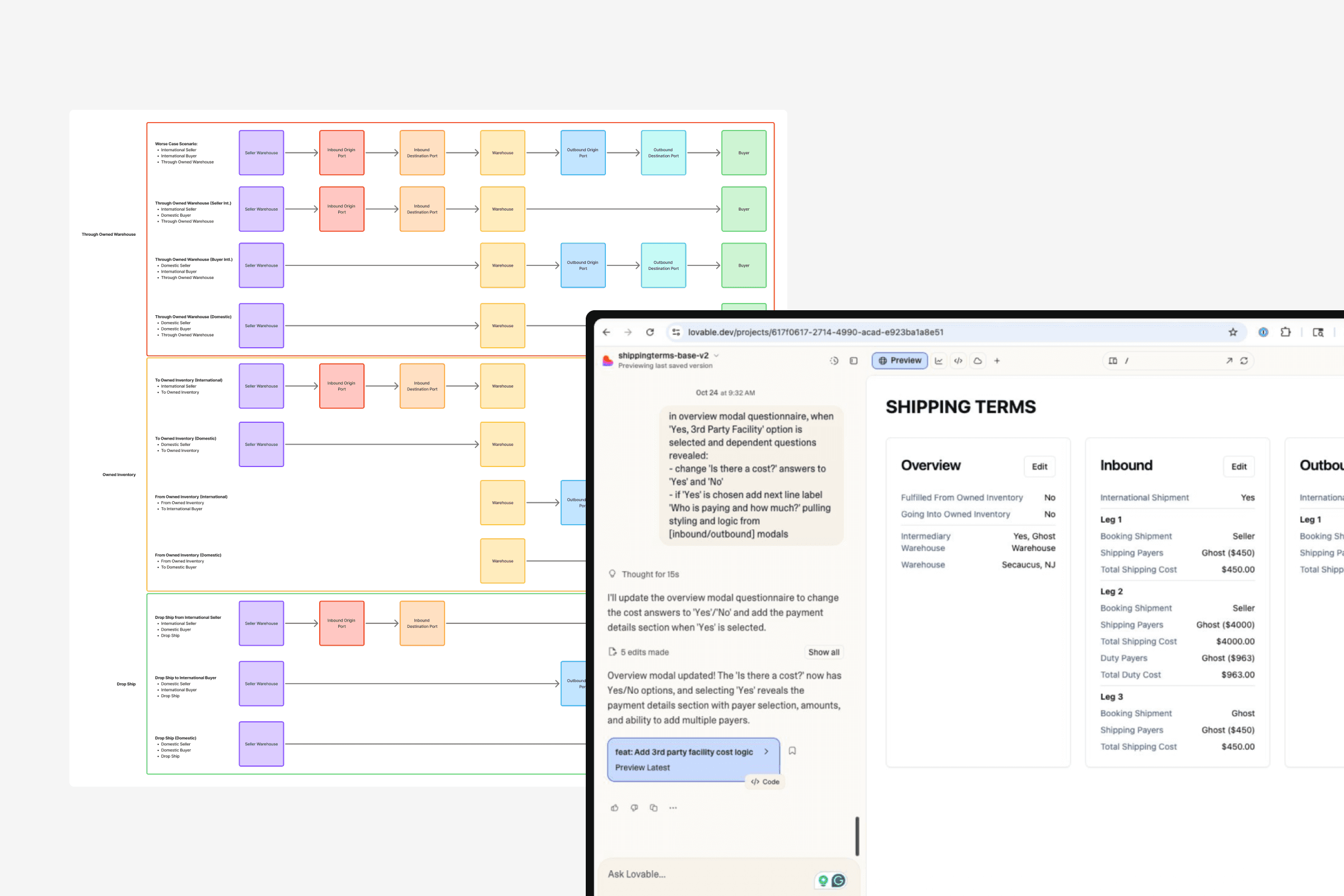
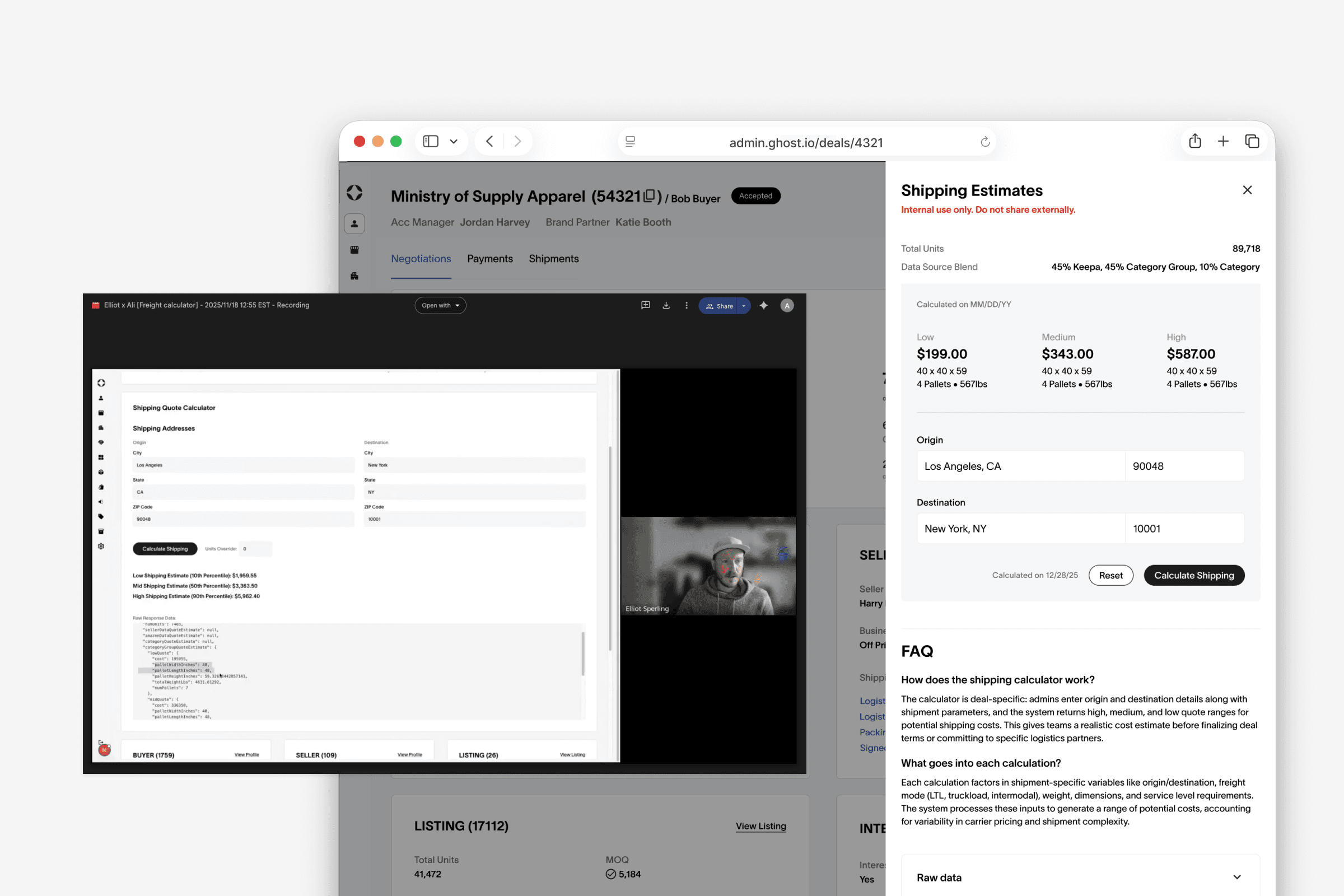
AI-POWERED VALIDATION
AI tools accelerated iteration. I validated multi-leg freight logic with stakeholders using interactive prototype, and paired with eng on data modeling to tighten the feedback loop and launch our shipping calculator faster.
FREIGHT IMPACT
✅ Support for nine-figure AOV
✅ 75% reduction in manual work
✅ Replacement of 3P tools
System 2: Making Payments Work For Everyone
On-platform payments had launched but only 24% of buyers used them. Most deal cycles were lengthened because Finance intervention was required.
Deals audited
Handsoffs per deal
Deals with manual
Finance intervention
Deals delayed
awaiting payment

LEGACY PAYMENTS
Our two-installment system couldn't serve growing clientele (solo shops to Fortune 500s) threatening retention.
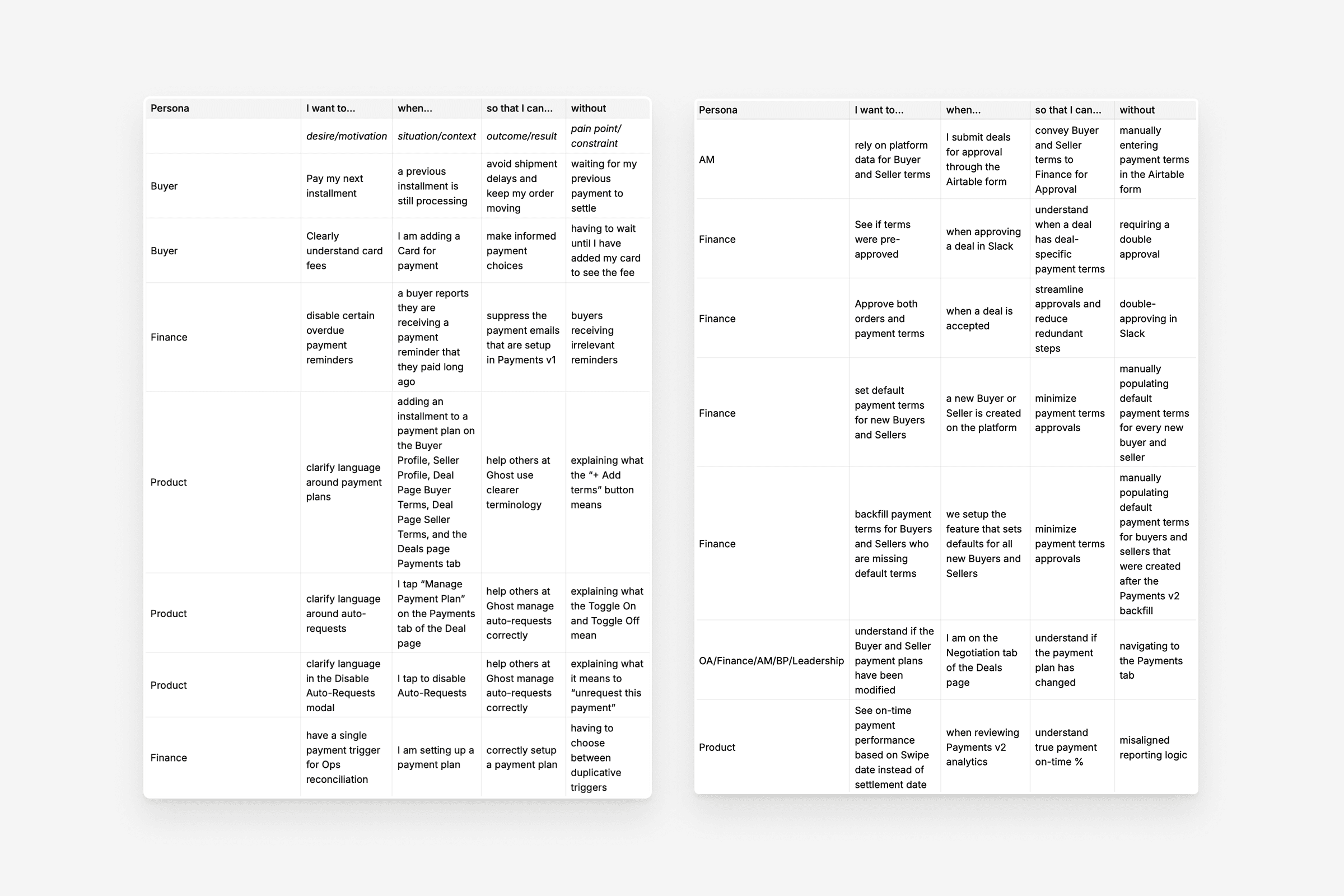
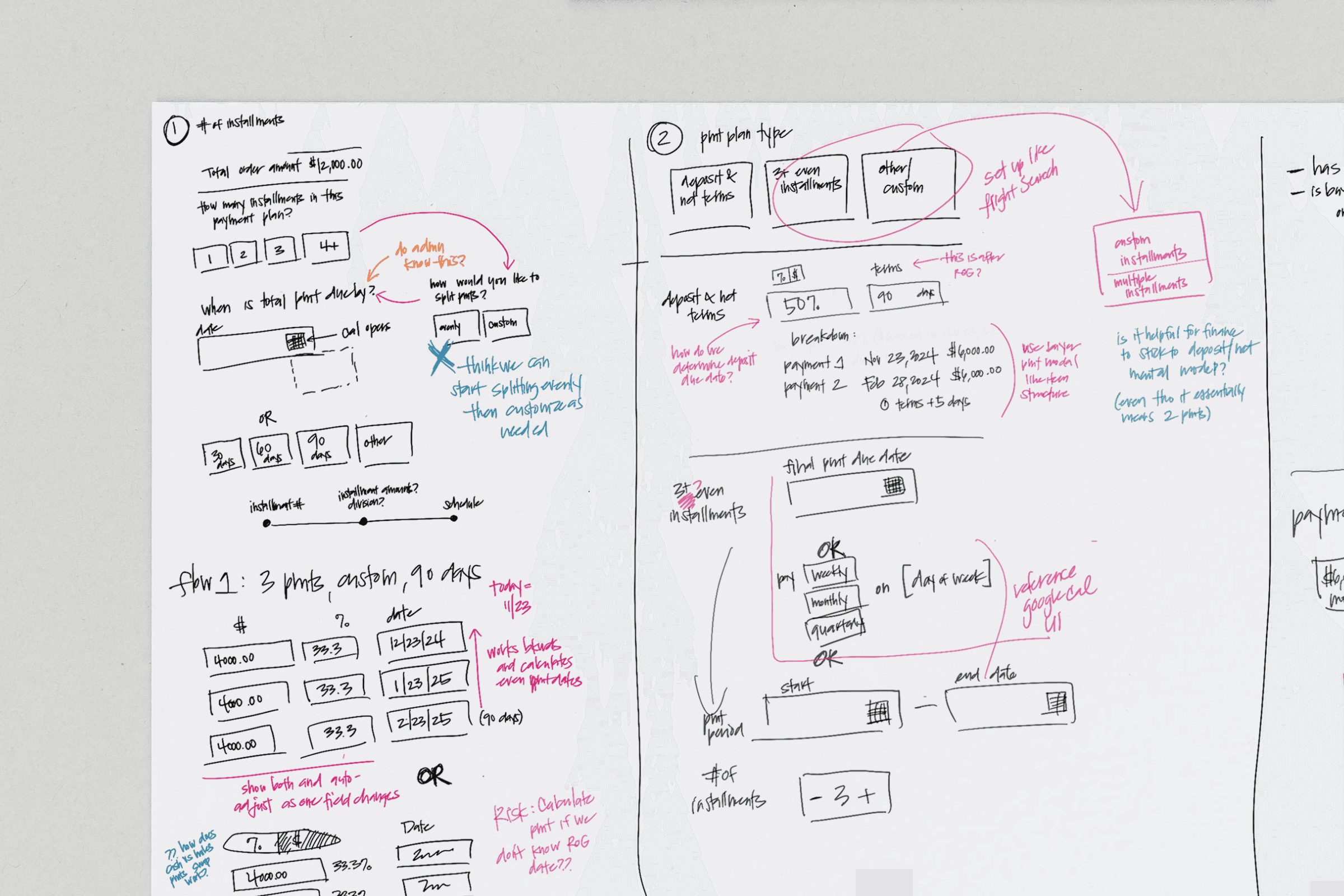

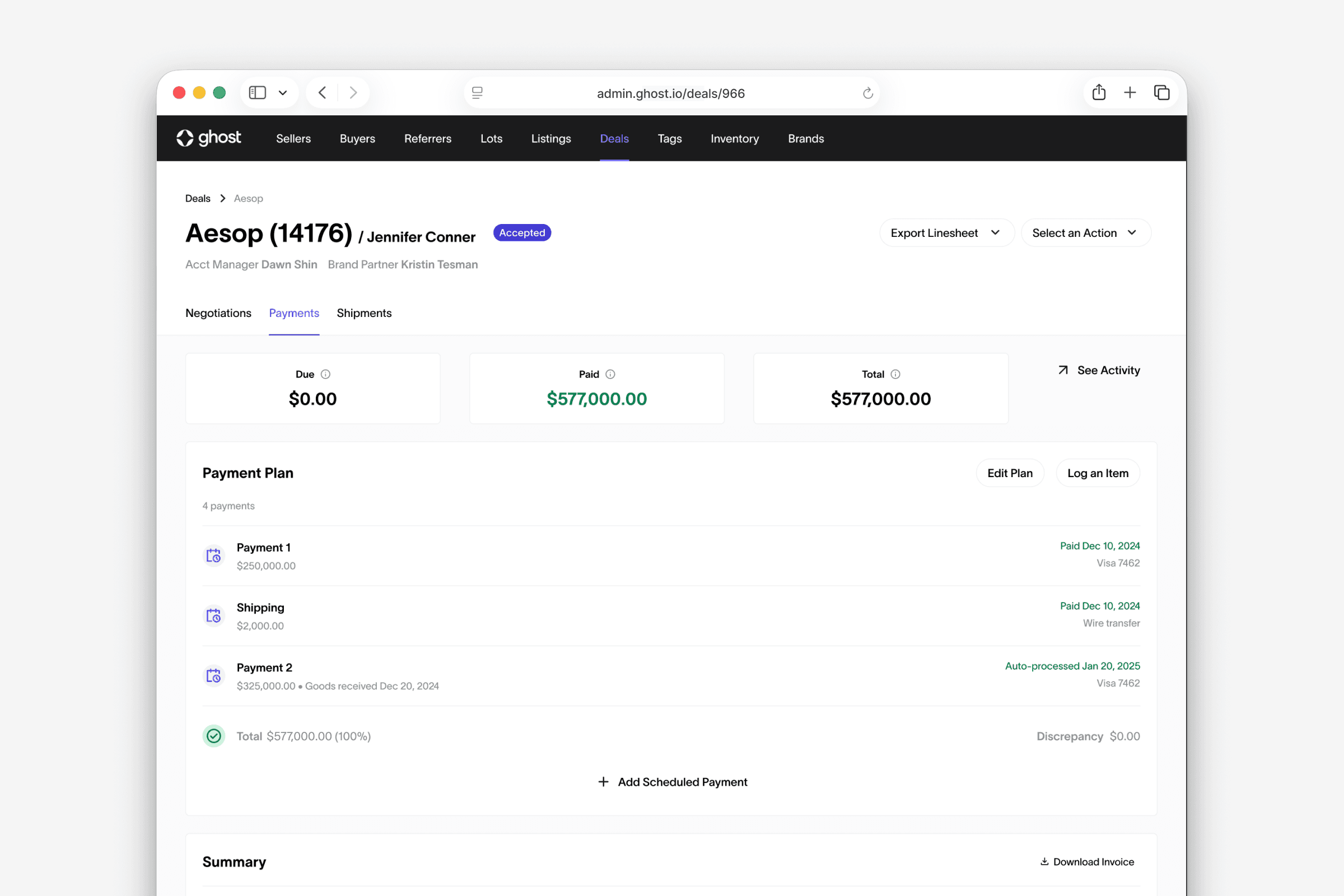
ADMIN EXPERIENCE
I accounted for pain points across users and built for:
Flexible installment tooling
Clear admin dashboard hierarchy
Requiring payment terms at offer acceptance (correlated to deal quality)
Finance approval gates

BUYER EXPERIENCE
I optimized the buyer interface for a primary action and progressive disclosure.
PAYMENTS IMPACT
✅ 24% adoption to 96%
✅ 1,000 monthly hours saved (=6 FTE)
✅ Zero failures in first month of launch ($47M)
✅ Shortened deal lifecycle
System 3: Supporting Split Shipments
The highest-value buyers often required orders split across multiple POs, multiple shipments, and unique payment allocations, things the platform didn't support. Without it, enterprise growth was at risk.
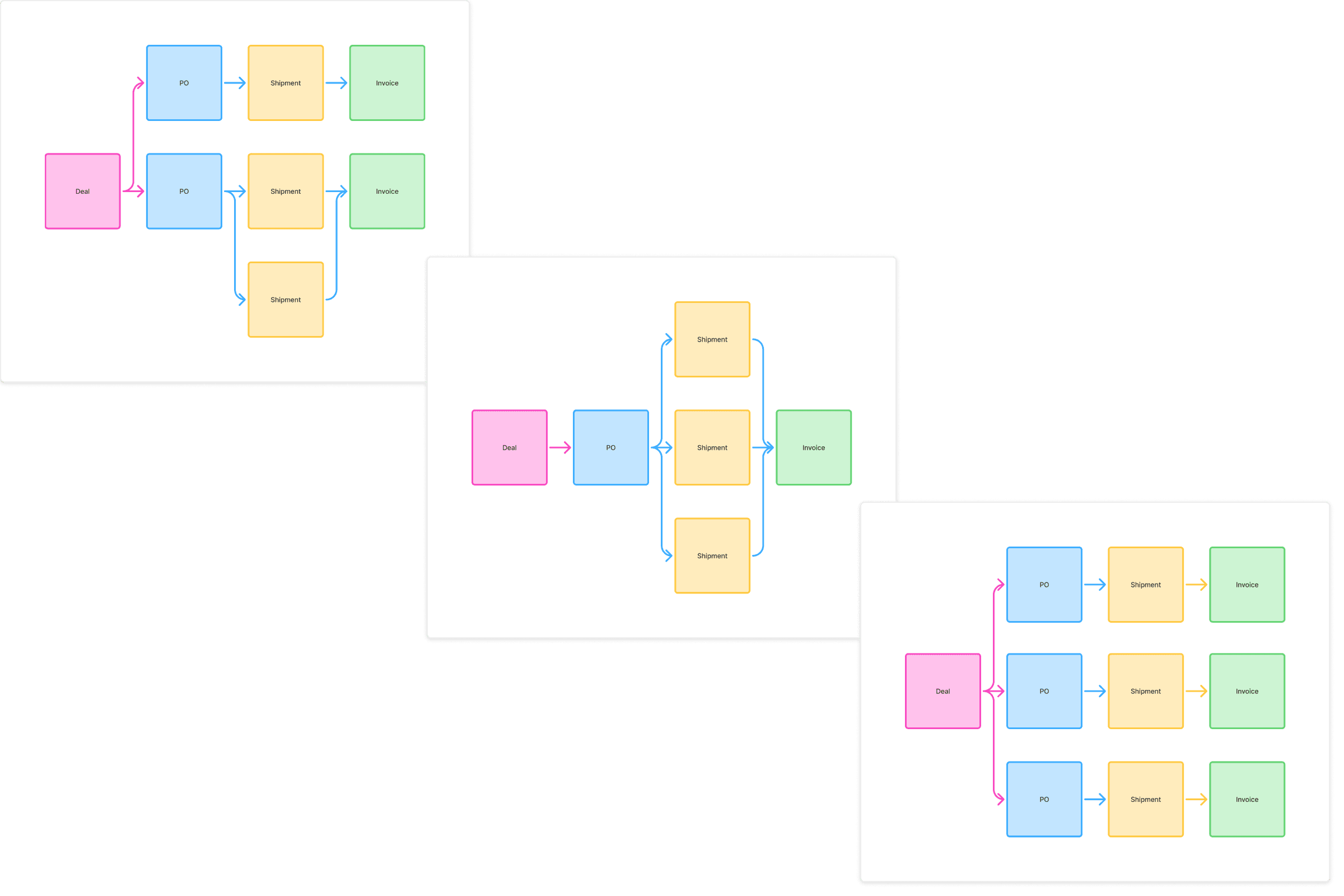

APPROACH
Pairing with Ops and Finance, I captured flexible use cases we'd need to support.
Working with a significantly reduced engineering team, we ran design and a functional proof-of-concept (POC) in parallel to first stress-test the underlying data model.
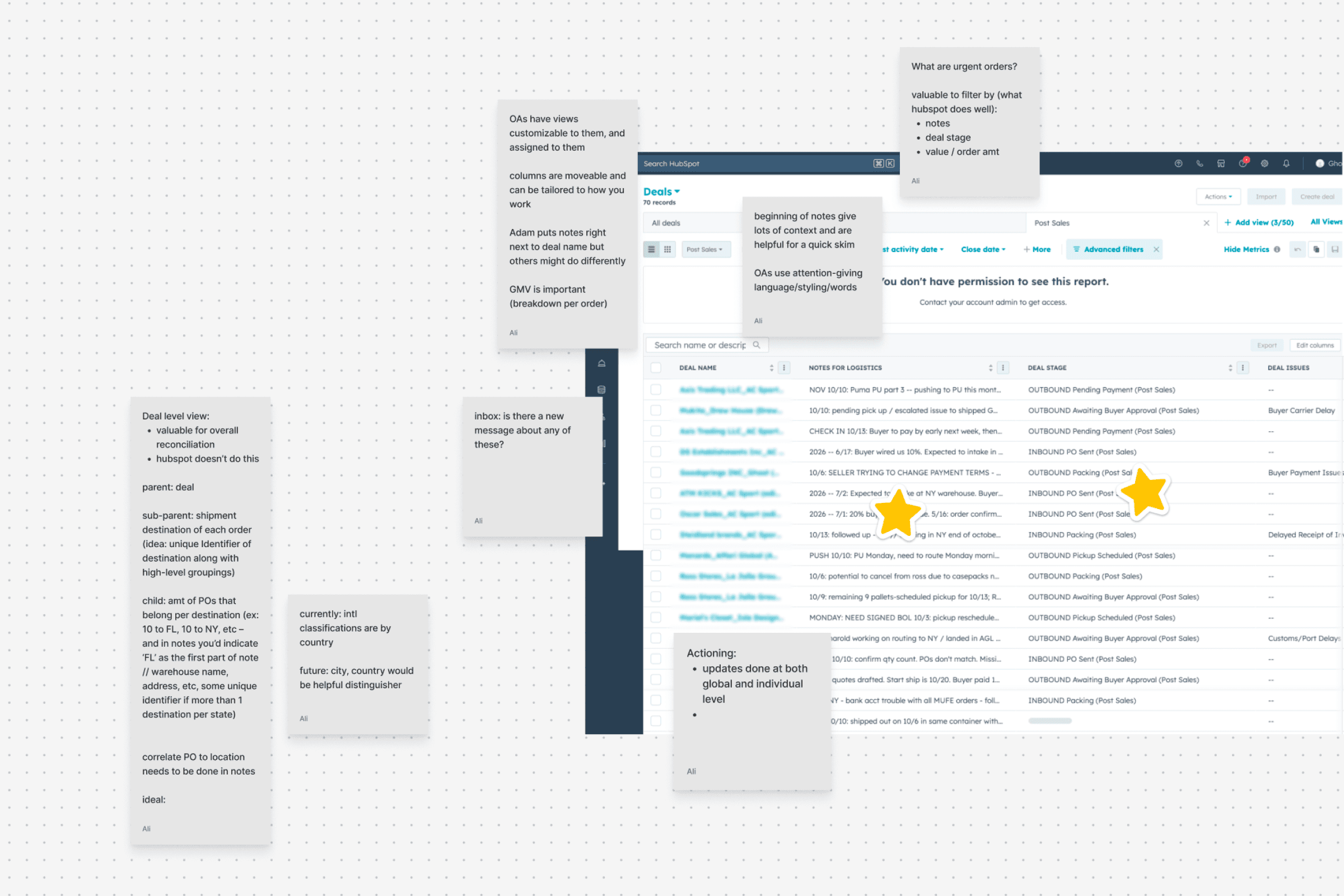
A key design challenge was what to show and what to withhold. The POC surfaced everything including underlying calculations.
Based on my Ops workflow audit I designed around immediate actions, with secondary information accessible but out of the way.

AI-powered order reconciliation was driven by our integration with TableFlow, tailored for Ghost.
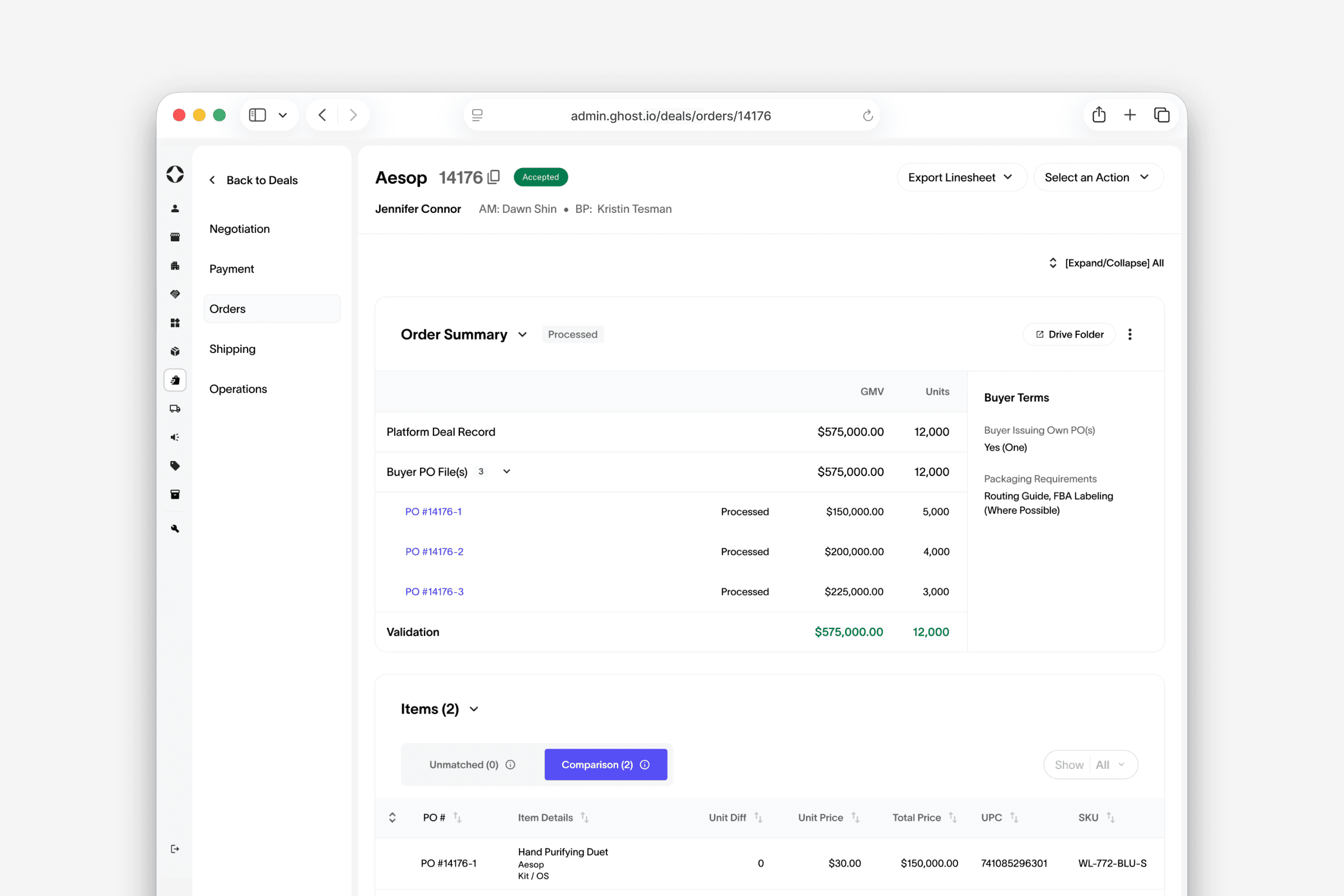
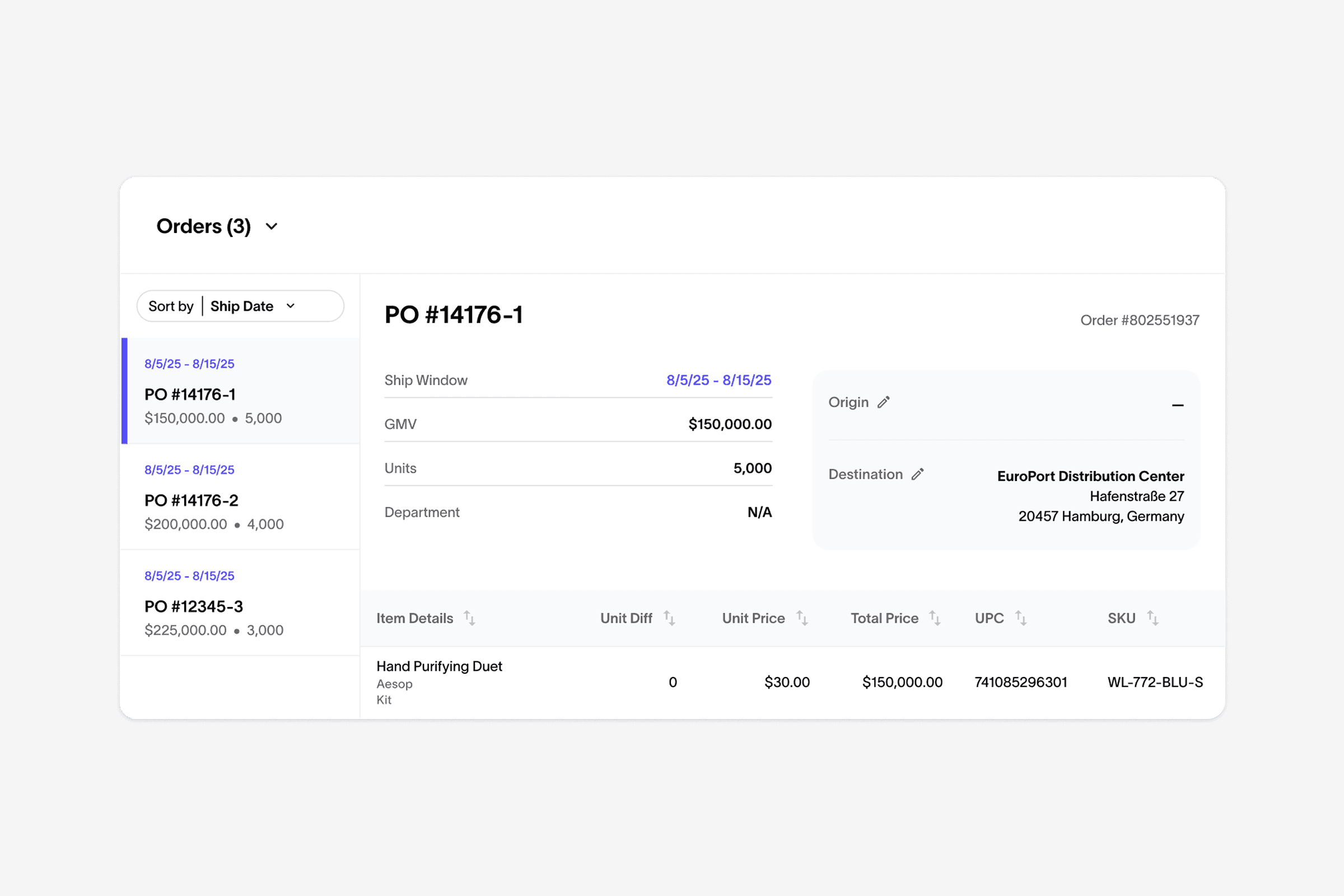
ADMIN EXPERIENCE
I designed for:
Scalability for data-density
Content hierarchy and clear signals for data conflicts
Split PO management
Editable shipping details
Note: Further work and implementation on this project was paused due to organizational changes
Reflections
🎨 Operational design is product design
The most impactful decisions weren't UI but working with partners to optimize workflows.
🧠 Platform thinking over feature work
Approaching from a foundational perspective, looking beyond incremental tools drove value.
🛠️ Workarounds informed the requirements
Understanding how our stakeholders used third party tools informed platform functionality.
🤖 Prototype to align, not just to validate
AI-assisted prototyping enabled higher velocity, as well as shared understanding and buy-in.